Médaille Militaire
Journey to the End of the NightThe Médaille Militaire is the decoration awarded to Ferdinand Bardamu while he is convalescing from a wound, and it becomes both a public badge of supposed bravery and a prop in the performance of wartime heroism. Bardamu wears it to the theater so civilians can see it; the resulting triumph brings him into contact with Lola, even as his later account exposes the gulf between the medal’s prestige and his distrust of the values it represents.
Award and Public Display
The medal reaches Bardamu in hospital while he is recovering from his wound. Rather than treating it as a private token, he takes it to the theater that same night, intending to let civilians see it during the intermissions. He recalls the display as a triumph: these were the first medals seen in Paris, and the sight astonished the audience. The decoration thus moves quickly from a military award into a public spectacle, lending its wearer a reputation before the people who have not shared his experience of the front.
That spectacle is inseparable from Bardamu’s ironic account of bravery. During wartime, he observes, the men dance in the cellar rather than on the mezzanine, and he declares that bravery is the truly indecent thing. His comparison of a brave man to a soft, pale worm turns the medal’s public meaning upside down: what civilians can admire as courage, he presents as a quality demanded of vulnerable bodies by a society that sends them to danger.
The Medal and Lola
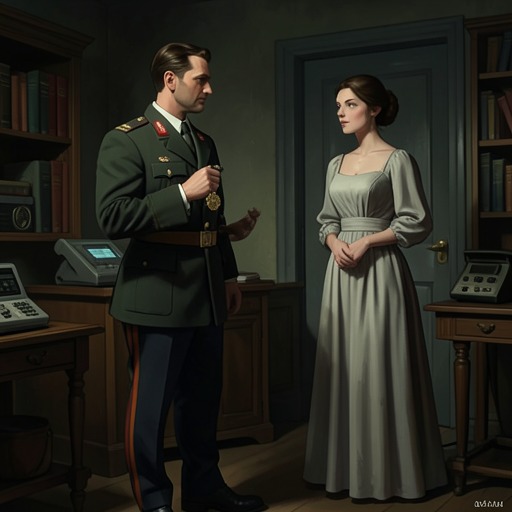
The theater encounter becomes a hinge in Bardamu’s life. In the lobby of the Opéra-Comique, he meets Lola, an American nurse whose uniform is decorated with small crosses. She has come to help save France, and her patriotic commitment stands in striking contrast to Bardamu’s conviction that heroism is intolerable after his experience of war. He says the medal helped him lose his innocence, but the meeting also makes him curious about the United States; Lola’s unanswered questions prompt a line of thought that opens toward travel.
Their attraction does not erase the political division between them. Lola’s enthusiasm belongs to the same wartime idealism that Bardamu has come to reject, while his wound and decoration make him appear to embody the heroic cause she supports. The medal therefore helps bring them together as an object of admiration, even as the narrator’s account insists that their understanding remains incomplete and that war stands between them.
Symbol, Status, and Irony
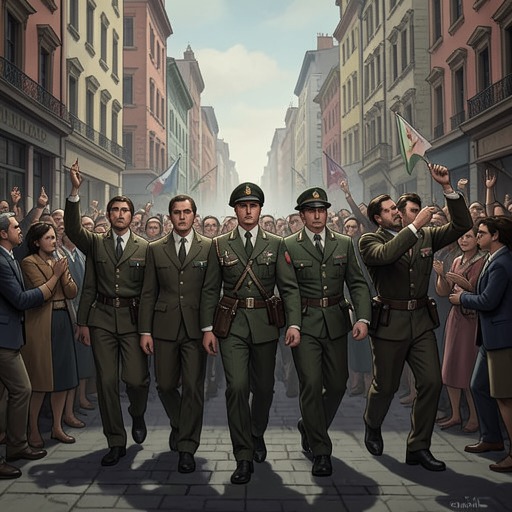
The medal’s meaning shifts as it passes between settings. In the theater it makes Bardamu an impressive figure to civilians; at the hospital it contributes to the public image of wounded men as patriotic heroes. Visiting socialites and public figures turn the hospital into a stage for patriotic fervor, where patients’ injuries and stories can be presented as evidence of national glory. The decoration belongs to this conversion of bodily danger into public prestige.
Yet Bardamu’s own later reflections dismantle that prestige. He recalls how his enlistment and experience of the front left him radically cured of heroism, while people without the connections to escape service remained exposed to its demands. The medal cannot undo the wound or change the social conditions that sent poor men into danger. Its force is chiefly representational: it makes suffering legible as honor to spectators, even when the decorated man sees the war as a massacre and fears returning to it.
The Médaille Militaire thus joins recognition to disillusionment. It gives Bardamu a visible distinction, opens the encounter with Lola, and helps shape the public performance of the wounded hero; at the same time, its prestige sharpens the irony of a society that celebrates bravery while consuming the bodies expected to display it.